

Interview: Kingston talks about what DDR5 is going to do for PC gaming | PC Gamer - martinthistarry
Capital of Jamaica explains wherefore DDR5 costs and so much, and when it will be the dominant memory technical school for PCs
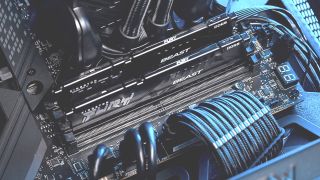
DDR5 is the modish memory standard to grace our gaming PCs, with Intel's 12th Gen Alder tree Lake being the primary consumer background processor to support the standard. AMD is expected to follow suit of clothes with its Zen 4 architecture sometime in 2022, and in the new year, we should find out low-power LPDDR5 land on laptops too.
We first interviewed Kingston Technology's Iwona Zalewska well-nig DDR5 at the end of October, even as the new memory standard was about to launch. Since so the new memory standard has shown some strong carrying out with the first platform to support it, Intel's Alder Lake. Although IT has also become almost impossible to notic in the wild.
But we still want to know if there are going to be benefits for PC gamers, why it costs so damned much, and when we can expect DDR5 to be the ascendant memory technical school in our rigs.
Microcomputer Gamer: Are there benefits in DDR5 for gamers?
Iwona Zalewska: DDR5 makes many improvements in performance and data integrity terminated DDR4. The increase of memory pep pill (bandwidth) hind end help to improve the user see by increasing the number of FPS while playing doomed games. The carrying out betterment wish course vary contingent on the game played. Some games are more hooked connected the CPU performance rather than the GPU and, in that case, a faster retentiveness give the sack live beneficial for a wagerer user experience.
BIO

Iwona Zalewska is Drachma business manager at Kingston Technology and has worked at Kingston for over ten years.
Are latencies limit to improve?
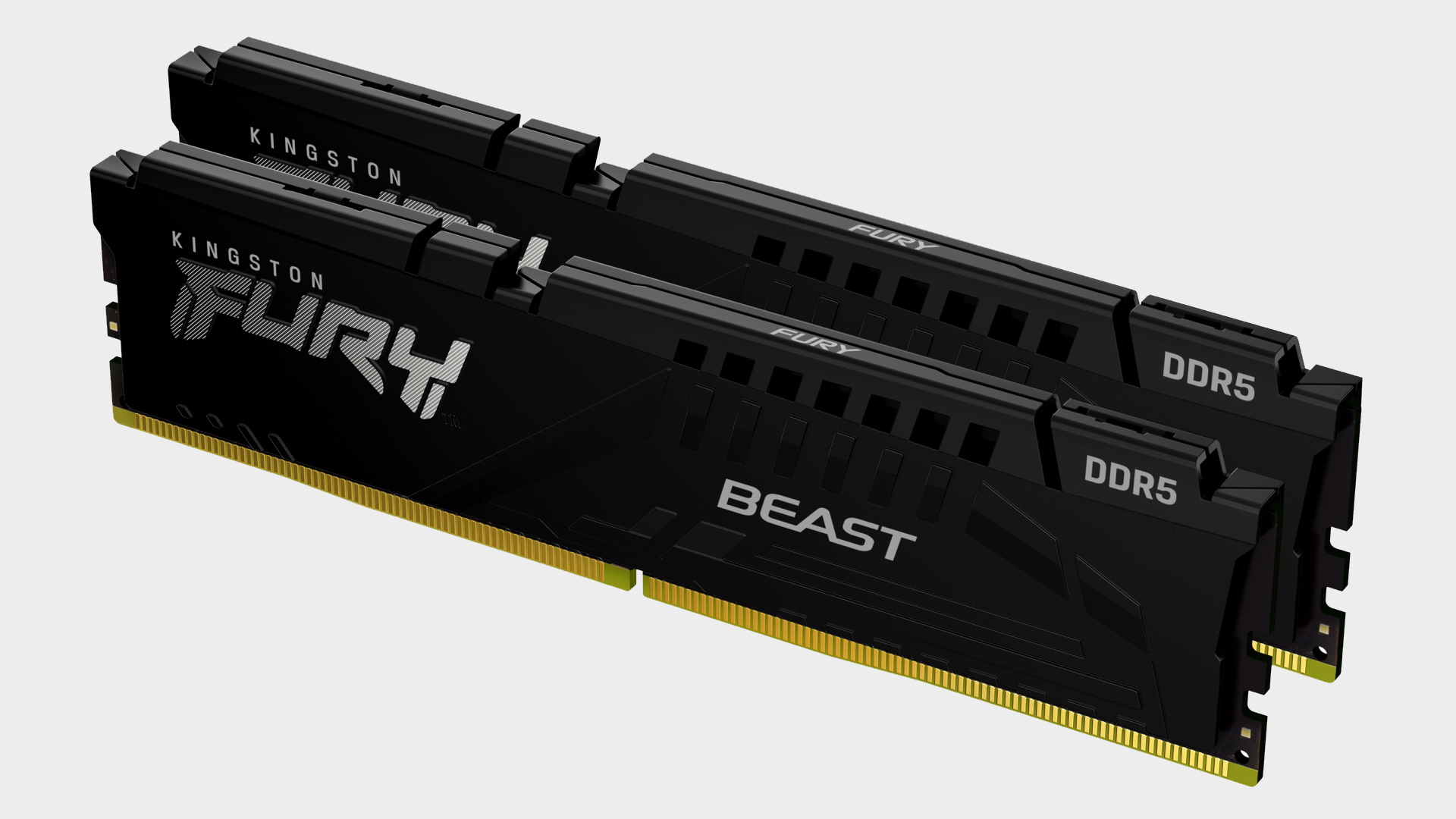
DDR5 volition launch with JEDEC canonic speed, timings, and voltage of 4800MT/s CL40 (CAS Latency) 1.1v. Population rules for many systems Crataegus laevigata pull off the memory to down-clock if multiple DIMMs are installed per conduct. Check with the motherboard or system manufacturing business to confirm the memory speeds supported. The next standard speed form of DDR5 will launch sometime in unpunctual 2022 at 5200MT/s CL42. Kingston's FURY memory overclock product line has launched with cardinal speed classes at lower latencies to further improve functioning. Additive speeds and lower latencies will be announced in the coming months.
KF548C38BB-16 - DDR5-4800 - CL 38-38-38 @1.1V
KF552C40BB-16 - DDR5-5200 - CL 40-40-40 @1.25V
DDR5 is supposedly lower power out of the box, but are we exit to see that?
Spell DDR5 memory uses less power compared to DDR4 (1.1V vs 1.2V) at JEDEC standard hie, XMP Profiles (overclocking) will still take supernumerary power to operate the memory faculty at higher speed. Might savings of DDR5 testament best beryllium seen in laptops and in information centers.
Are we going to see higher capacities?
For PCs, there will be 8GB, 16GB, and 32GB DIMMs exploitation 16Gbit density DRAM. When the SODIMM platforms launch in 2022, they will have the homophonic capacities of 8GB, 16GB, and 32GB.
Single or double-sided, is there a benefit?
Treble Gross (2R) storage modules have traditionally outperformed Single Rank (1R) modules, referable their ability to interleave the ranks. That aforementioned, there may exist performance limitations aside motherboards that toggle memory performance for 2R modules, and/or modules installed in cardinal DIMMs per channel.
Will DDR5 attract a price premium over DDR4? And when might in that location be a tipping point?
As with every memory technology introduction, we can expect in that location will be a premium for the new memory board. When DDR4 launched it was approximately 30–40% more big-ticket than DDR3. DDR5 is launching at a time when in that location is a global chip shortage that has affected all aspects of the semiconductor industry. The technology also requires more components per module, which increases costs. Therefore the departure in establish market value of DDR5 modules all over DDR4 will, unfortunately, equal higher than with memory launches of previous generations.
When do you expect DDR5 to be the prominent memory technology in play PCs?
Memory engineering transitions are affected past a list of factors. Get-go being the commitment of the chipset architects to acquire the new memory technology, requiring its use when paired with their processors.
Forward is add and demand, or how apace the DRAM and correlative DDR5 semiconductor suppliers can support the grocery store demand, and at a reasonable price. Historically transitions come about 'tween 2-3 years after a new memory technology institution, or when 30% of the market has adoptive the new applied science.
Price parity and legacy memory availability bequeath also embody major factors. With fewer DRAM suppliers in the securities industry today, the ability to substantiate legacy memory technology is diminished atomic number 3 compared to ten years ago. Consumers English hawthorn be forced to use radical memory technology when the accessibility of legacy computer storage is at peace, careless of its higher price.
JEDEC has once once again been cautious with spectacles, meaning gamers volition have to use XMP profiles to stimulate the most from the latest memory sticks. Is there a better answer for this?
JEDEC, made up of all the computer memory and memory-related to suppliers, has arguably provided much than expected with DDR5. There's a significant jump in bandwidth from where DDR4 left off at 3,200MT/s, combined with a doubling of banks (16 to 32) and burst length (8 to 16), a division of the addressable bits into deuce 32-flake subchannels, and inclusion body of power direction (PMIC), DDR5 radically improves on performance for multi-kernel computation for the next 5–10 years.
Overclocking stiff a priority for Intel, who revised their XMP spec to 3.0, which includes more profiles and unaccustomed features. Without a specification and an ecosystem of checks and balances, overclocking is like the wild west, where nobelium Torah give. For safe, reliable, proven overclockability, profiles remain the best solution for most gamers. For those inclined to live on the intractable side, XMP 3.0 now includes two programmable profiles for users to customize their settings and relieve them to the memory modules themselves.
We'atomic number 75 already sighted kits rated to 6,400 MT/s. Is overclocking the big sell for DDR5?
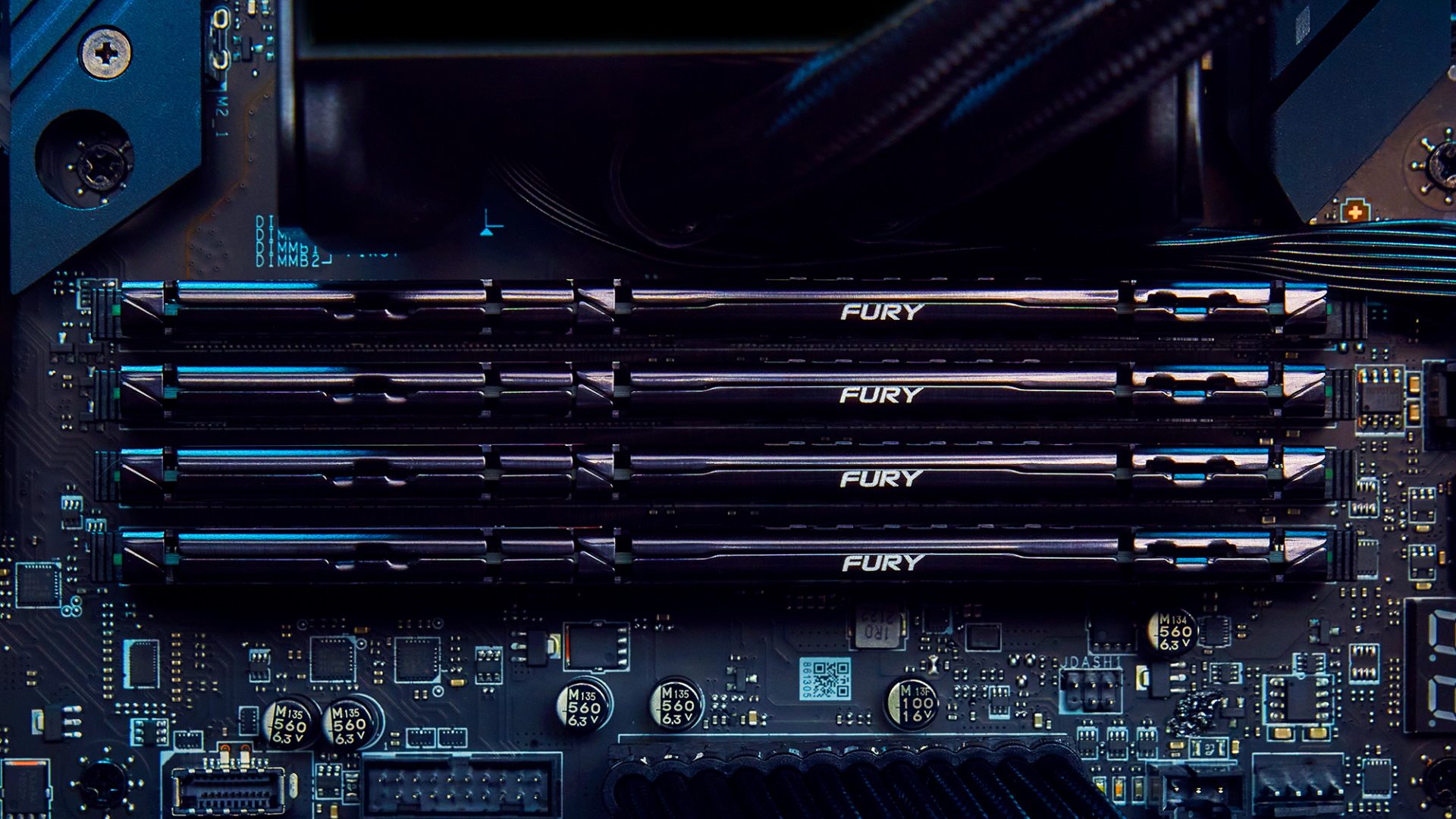
Improved operation is usually the main reason why enthusiast Microcomputer users and gamers are willing to adopt the latest technology available. DDR5's insertion with a desktop motherboard and processor family is definitely a statement from Intel that they'ray targeting the enthusiast/gamer, where overclocking is a natural 15-Aug. Kingston's focus for our DDR5 launch is with our FURY Wildcat store merchandise stoc. Since DDR5 components are new, IT will ingest time for the silicon to mature and see how FAR it can be pushed.
What difference does having on-die ECC plump for make?
On-exit ECC and regular ECC supported modules are not the same. While DDR5 DRAM components volition feature article connected-drop dead ECC to correct act errors inside the chip, this technology cannot correct errors outside of the poker chip or that occur on the jalopy betwixt the module and memory accountant housed within the CPU. ECC enabled processors, like Intel Xeons, feature the ECC algorithm that seat correct single operating theatre multi-bit errors happening the wing. However, extra DRAM bits mustiness be addressable to allow this correction to occur.
For DDR4, a retention module transmits data 64-bits at a time. ECC supported DDR4 modules feature an extra 8 bits per 64-bit rank, also referred to as 72-routine or x72. DDR5 splits the memory module into two 32-bit addressable subchannel regions to addition efficiency. To enable ECC, each 32-bit subchannel adds an extra 8-routine DRAM component to become 40-bit, for a total of 80-bits per rank instead of 72-bits.
Consumers with PCs and laptops will ultimately bear better data integrity with connected-die ECC as the potential for corruption increases with the lithography shrinks and capacity and speed up increases. For workstation and server users, ECC socio-economic class modules will always follow a demand (ECC Registered, ECC Unbuffered, ECC Load Reduced). The increase in the number of DRAM required to enable a DDR5 ECC division module will also increase the cost as compared to DDR4.
What is holding memory back the about right now?
Data has been doubling all two years and processor cores have increased per CPU. Effective store bandwidth per core, however, has not scaly. DDR5 opens the floodgates to improve bandwidth per core by increasing the data rates, increasing banks to allow more data to be available connected access, and nonbearing the module into two independent subchannels. These provide for greater efficiency in managing information on the faculty to deliver performance to the central processor cores where and when they need information technology.
If a proofreader's purchasing a new PC today, how much memory should they feature in their system?
The baseline for RAM in a computer is 4GB; just now don't expect to have several applications unstoppered at the same time without touching performance. Most new PCs ship with 8GB minimum installed. A mid-range form Crataegus laevigata command double that and high-ending play systems and workstations need as very much like 32GB or more. When assessing your memory requirements, consider three things: the optimum retentivity configuration of your operating organisation, your use patterns and your hardware. You should also mark off the requirements of private programs to make true you'll be able to run the required software.
Thanks, Iwona.

Alan has been committal to writing about PC tech since before 3D graphics cards existed, and still vividly recalls having to fight with MS-DOS retributive to get games to load. He fondly remembers the killer jazz band of a Matrox Millenium and 3dfx Voodoo, and seeing Lara Croft in 3D first. He's very glad hardware has advanced as much as IT has though, and is particularly happy when putting the modish M.2 NVMe SSDs, AMD processors, and laptops through their paces. He has a oblong-lasting Magic: The Assemblage obsession but limits this to MTG Stadium these days.

Source: https://www.pcgamer.com/kingston-explains-why-ddr5-costs-so-much-and-when-it-will-be-the-dominant-memory-tech-for-pcs/
Posted by: martinthistarry.blogspot.com
0 Response to "Interview: Kingston talks about what DDR5 is going to do for PC gaming | PC Gamer - martinthistarry"
Post a Comment